Preliminaries solution #2
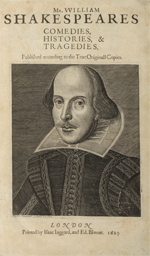
The second solution is to insert the half-sheet with the author portrait in between 1v and 2r, with no anchoring support at the other end. Take the full sheet and place at the end of the gathering as its own unit. If you have trouble, you can click "Auto-gather" to have the sheets placed in the gathering diagram automatically.
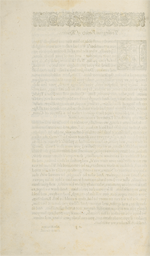
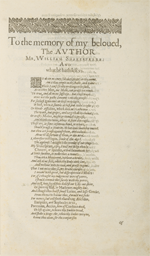
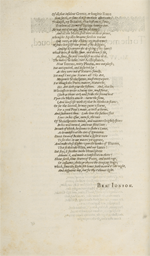
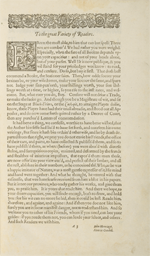
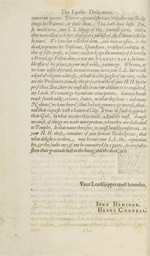
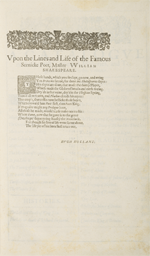
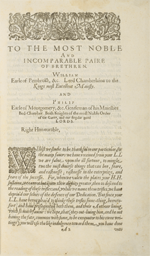
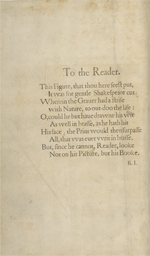
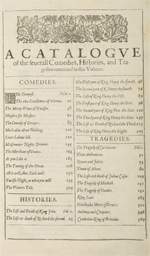
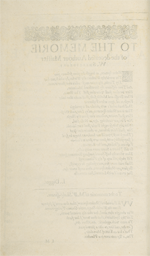
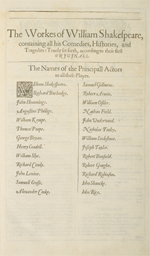
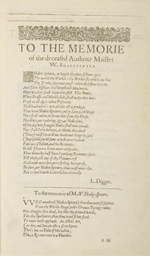
Gathering πA6 (πA1+1, πA6+1.2)
1
+1
2
3
4
5
+1
+2
6
It becomes even more difficult to piece together the printers’ intentions for these preliminaries when we account for the many initial pages that have been lost to wear or to the mining of defective copies to make better complete copies. The vast majority of preliminaries of the First Folio are “made-up” from other copies. One fundamental reason this is all so happenstance is that somebody decided to add an author portrait. By breaking down the usual “folio in sixes” rhythm of printing, that half sheet drove home the emerging idea of the single author of dramatic literature. That portrait has gone on to achieve iconic status. It is also one more reminder of the problem-solving skills of the printers working under pressure to produce what has indeed become a landmark book.
We hope you have enjoyed these exercises. Please return to the main DIY First Folio homepage for more information and resources about the making of the First Folio.
The images used in the DIY First Folio exercises are derived primarily from Folger STC 22273 fo.1 no.68. Exercise 2a uses images from Folger STC 22273 fo.1 no.68 that have been altered to approximate the hypothetical apprearance of the unfinished gathering “gg”. Exercise 2c features an image of the cancelled final page of Romeo and Juliet that is derived from Folger STC 22273 fo.1 no.71.