Keeping the rhythm, from one gathering to another, from one play to another
With ideal conditions in the print shop, the pattern you’ve now established would continue with complete regularity through the rest of the book.


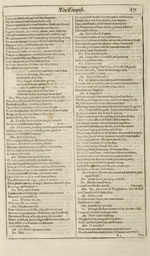
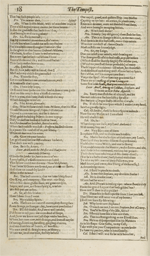
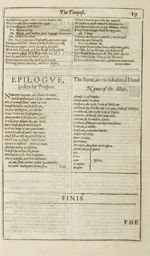
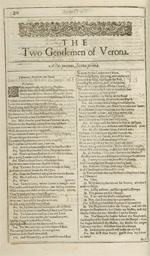
In most instances, the end of one play did not coincide with the end of a gathering. Printers would simply begin the next play in the same gathering in order to save paper. The next exercise allows you to finish “printing” The Tempest in signature B, and you’ll also see how the first 5 pages of The Two Gentlemen of Verona are mixed into the same gathering.
As you learned in exercise 1a, there are three sheets, six leaves, and twelve pages in a typical gathering of the First Folio. Following the sequence of six “leaves,” drag and drop these pages into the blank forms to position the first three sheets of the First Folio for printing. Note “r” is for recto, or the front of a page, and “v” for verso, or the back. The schematic “gathering” at the bottom is your goal. Start with the innermost sheet, as the printers did. Don’t forget to flip the forms to recreate both sides.
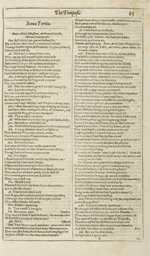
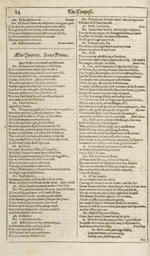
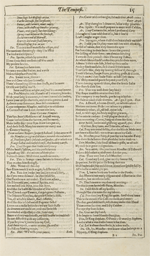
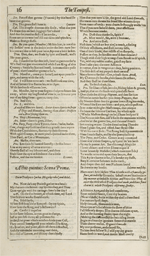
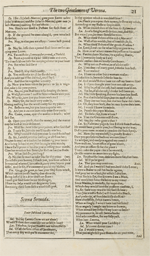
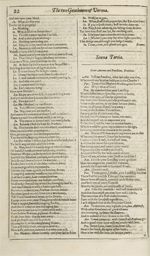
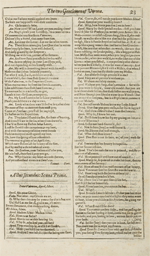
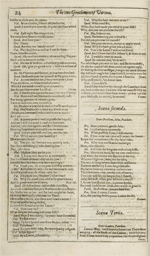
3v
4r
4v
3r
2v
5r
5v
2r
1v
6r
6v
1r
Once all the sheets for a gathering are complete, gather them in the proper order in the gathering by dragging each sheet into the proper place in the gathering diagram. If you have trouble, you can click "Auto-gather" to have the sheets placed in the gathering diagram automatically. Once all the sheets are placed, click "Read" to view your work in book mode.
Gathering B6
1
2
3
4
5
6
There were just over 75 gatherings in the First Folio. To keep track of their work, printers labeled gatherings using the alphabet: the first gathering in “sixes” was “signature” A6 (or three sheets, A1, A2, and A3); the second gathering was B6, and so on. When printers reached the end of the alphabet, they restarted with the lower case, and then double letters, and so on, all the way to bbb in the First Folio.