Romeo without Troilus: ghost #2
Sometime after the initial press halt, the publishers managed to negotiate the necessary permission to print Troilus, and printing started again. The printers needed a new placement for Troilus, and they had partially complete sheets they did not want to waste. They decided to place Troilus at the beginning of the Tragedies.
Multiple stages of these rapidly unfolding events are reflected in different copies of the First Folio. Interruptions in the sequence of the page numbers and the sequence of gatherings are effectively witnesses to these external disruptions to the printing of Troilus.
Let’s continue to follow the printers through some of their problem solving solutions and ad-hoc accommodations—the ghosts of their trial-and-error—as they stopped printing in one place and picked it up again in another.
The printers decided to put aside the sheets printed with the first three pages of Troilus, break the rhythm of the gathering in sixes, and print the last four pages of Romeo and Juliet on a single sheet. When folded, that became a “bifolium.” Drag and drop to print those four pages in one sheet.
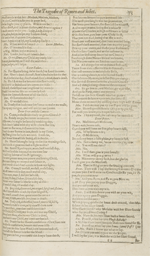
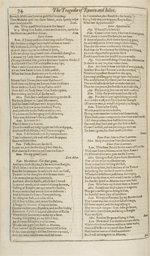
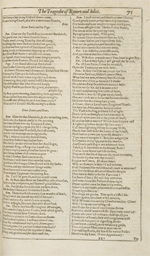
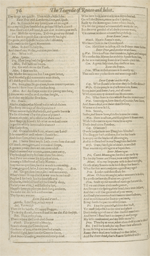
1v
2r
2v
1r
Drag the sheet into the gathering diagram. If you have trouble, you can click "Auto-gather" to have the sheets placed in the gathering diagram automatically. Once the sheet is placed, click “Read” to view your work in book mode.
Gathering gg2
1
2
The printers inserted this bifolium at the end of Romeo and continued printing the Tragedies with Timon of Athens. In the meantime, they had been given permission to print Troilus, after all. The printers took the sheet with the first three pages that they had already printed, drew a thick X across the last page of Romeo, and resumed printing Troilus. They put the play at the start of the Tragedies, out of alphabetical sequence.