First things last—a fitting introduction
Prefatory materials set a tone and introduce the book to the reader. In the period of the hand-press, the introductory materials were often among the last pages to be printed.
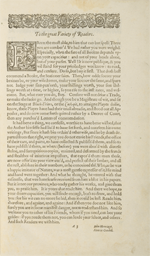
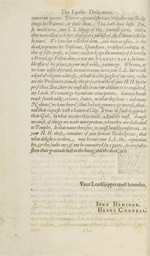
A printer would understand the advantages in keeping that material to one gathering—and we do too, now. But the preliminaries of the First Folio are irregular, and include one and a half extra sheets. As has been the case before, we can think about this irregularity as a window into a certain amount of uncertainty and problem-solving about what exactly was to be contained in the preliminaries.
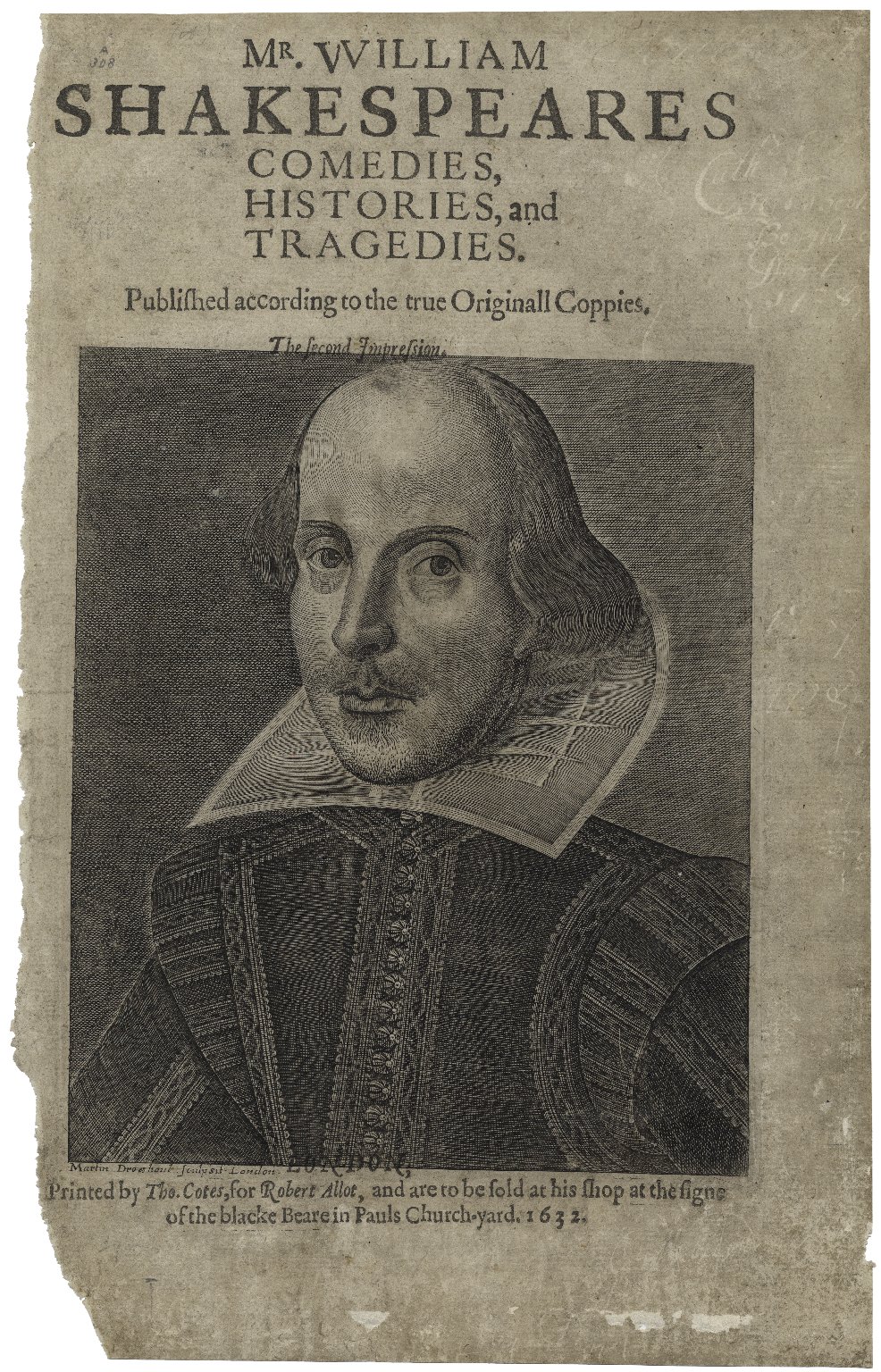
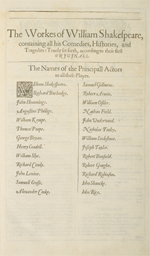
An engraved frontispiece authorial portrait signaled the significance of this collection of plays. An author portrait also required some additional problem-solving in the print shop. An engraving had to be printed on a “rolling press,” for the impressions an engraved plate made on a sheet of paper were the exact reverse of the impressions made by moveable type. Possibly so as not to slow work or waste paper, half-sheets of paper were run through the rolling press for the engraved author portrait. The title lines in type were added later when the page was run through the “common press.”
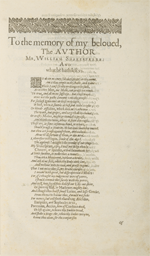
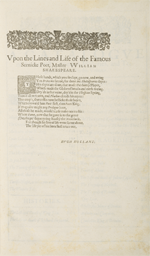
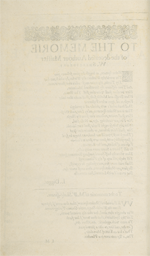
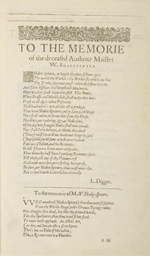
In this final set of exercises, the sheets are already put together. Two of them must be nested together in one particular way, because the text runs on from one page to the next. A third has the Ben Jonson poem inviting readers to “looke / Not on his Picture, but his Booke.” So that calls to be positioned facing the portrait, which is on a half-sheet. And there is yet another printed sheet. How did the printers integrate these extra pages into the introductory materials? There are two solutions found in various copies.
Preliminaries Solution #1
As you have done before, drag and drop into position on the gathering diagram the sheets labeled 3/4 , 2/5, and 1/6. What to do with the extra sheet and a half? The first solution is to anchor the half sheet and whole sheet together. Insert the half sheet with the portrait between 1v and 2r. Insert the full sheet in between 5v and 6r. They are positioned to be anchored to each other with the sewing stitches for the gathering. If you have trouble, you can click "Auto-gather" to have the sheets placed in the gathering diagram automatically.
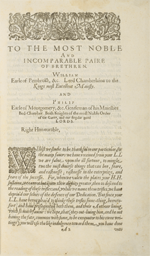
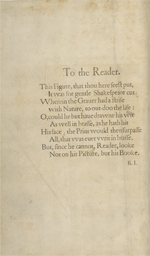
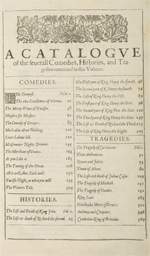
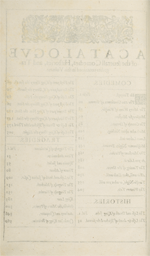

Gathering πA6 (πA1+1, πA5+1.2)
1
+1
2
3
4
5
+1
+2
6